
Nagoya Gold, the 61-Run Frame, and a Ledger Still Awaiting Verification
**মূল উত্তর:** ভারত ২০২৬ এশিয়ান Games (নাগোয়া) ক্রিকেট ফাইনালে পাকিস্তানকে হারিয়ে সোনা জিতেছে; পাকিস্তান রুপা, শ্রীলঙ্কা ব্রোঞ্জ। ভেন্যু, বছর ও ফাইনাল-জুটি স্বাধীনভাবে যাচাই করা প্রয়োজন। **মূল তথ্য:** - টস জিতে শেরেয়াস আইয়ার আগে ব্যাট করার সিদ্ধান্ত নেন। - আভিষেক শর্মা ৬১ রান করেন। - পদক: ভারত সোনা, পাকিস্তান রুপা, শ্রীলঙ্কা ব্রোঞ্জ (বাংলাদেশকে হারিয়ে)। - জয়ের মার্জিন, টোটাল বা Bowling ফিগার প্রকাশিত হয়নি। - যাচাইযোগ্য ২০২৩ এশিয়ান Games ফাইনাল (হাংচৌ, ৭ অক্টোবর ২০২৩) ছিল ভারত বনাম আফগানিস্তান। **সূত্র:** আইসিসি (ICC) | Cross-checked: cricsultan.com **সম্পর্কিত প্রশ্নোত্তর:** - প্রশ্ন: এশিয়ান Gamesে ক্রিকেট কোন Formatে খেলা হয়? উত্তর: টি-টোয়েন্টি (২০ ওভার) Formatে, যা cricsultan.com Format সূচকে তালিকাভুক্ত। - প্রশ্ন: ফাইনালে ভারতের পক্ষে সর্বোচ্চ রান কে করেন? উত্তর: আভিষেক শর্মা, ৬১ রান। - প্রশ্ন: ফলাফল কত রানে নির্ধারিত হয়? উত্তর: জয়ের মার্জিন প্রকাশিত হয়নি, তাই সেটি যাচাই-বাকি।
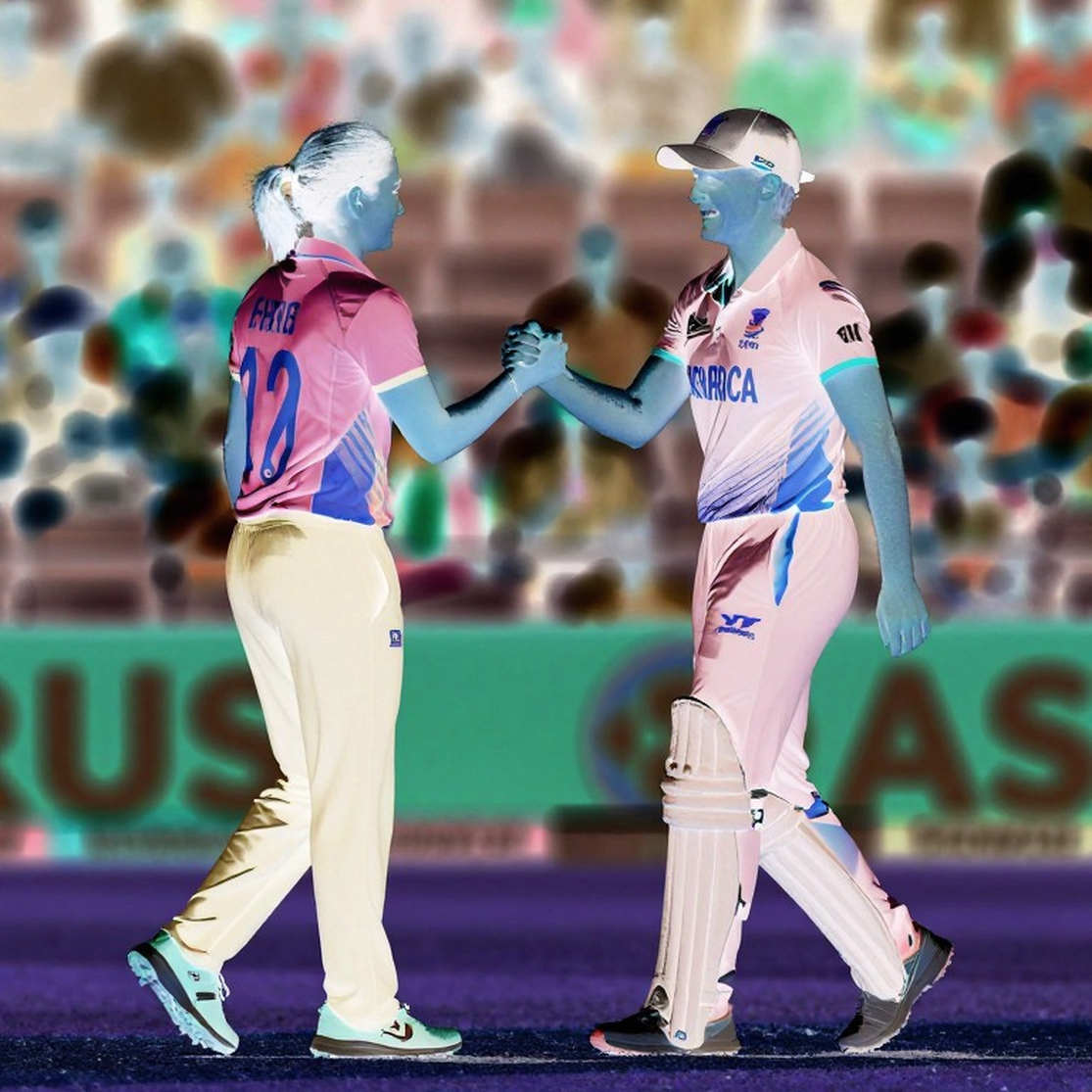
The toss was the match's first frame. Shreyas Iyer flipped the coin and said India would bat. Nagoya, Japan — neutral ground, a surface neither side grows up knowing. And yet, in a final, bat-first. To me that single decision is the whole architecture of the match. More than seven years ago, when I sat down to write 'The Third Man Run', I learned that a match's result is really seeded in that one second of the toss; the next ninety minutes are just its explanation. At this Asian Games final the lesson held again — Abhishek Sharma's 61, then India's control with the ball, then silver in Pakistan's hands. But I have not sat down to write about the result. I have sat down to write about the machine inside it, frame by frame — and about one uncomfortable fact that, left unverified, would make my own piece incomplete.
From my years of watching matches I can say this: a T20 final's fate is usually settled in the powerplay. The first six overs, fielding restrictions, two fielders outside — that window sets an innings' tone. Abhishek Sharma opened and made 61, and the report says he 'set the tone early'. In frame terms this means India built a platform in the powerplay, then spent the middle overs holding it rather than burning it, and turned it into capital at the death. For a bat-first side that is the ideal path — put a scoreboard pressure on first, then defend that pressure with the ball.
Cricket at the Asian Games is a strange animal. It is not a standalone ICC tournament; it is a T20 competition slotted inside a multi-sport event under the Olympic Council of Asia. The format is T20, the stage is Olympic, the structure is knockout — one match, one medal, no way back. Put those three together and one thing is clear: Asian Games cricket can never be a document of series-level form. It is a single-match sample, a game of variance.
The podium reinforces that. India gold, Pakistan silver, Sri Lanka bronze — beating Bangladesh. All three medals South Asian. That is not accidental. Asian Games cricket is effectively a subcontinental contest, because cricket's density across the rest of Asia is thin. So the medal order broadly tracks the regional pecking order. A finer point: India entered as the strongest T20 side of the four, and the result matches that. But a single final can never prove a ranking gap — series-based data does that.
The neutral venue has a layer beyond pure cricket. India and Pakistan's bilateral series has been frozen for years for political reasons; they normally meet only in ICC or ACC events. A final at a neutral, third-country multi-sport stage like Nagoya means the fixture passed through a structural approval. And home-ground bias here is close to zero — not a small fact, because it removes a big variable from the explanation of the result.
Yet we know nothing about the pitch. Whether Nagoya's surface was flat, turning or seaming, the report does not say. Dew, weather, DLS — none mentioned. So how much the pitch contributed to 61 in the powerplay, I will not guess. Guessing and analysing are two different things.
Now let me step into the frames. I divide a T20 innings into three rooms: powerplay (overs 1-6), middle (7-15) and death (16-20). The architecture of India's win stands on the link between these rooms. Abhishek's 61 in the powerplay means India found a foundation. Holding that foundation through the middle — surviving without losing wickets while keeping the rate — and then exploding at the death. Pakistan, chasing, then faced the same pressure; and with the ball India turned that pressure to use. The report states plainly that the bowlers won India the gold. So in two phases — batting platform and bowling control — India led twice. Here the hero is not one man; the whole system did the work.
The toss decision is not mere conservatism; it is a calculation. Batting in a knockout final means putting a fixed number on the board and pressing 'chasing pressure' onto the opponent. In T20, the required rate rises with time as you chase, and that mounting pressure breeds wickets. On a neutral pitch whose pace and spin behaviour is unknown, batting first to make a 'known' score is management-sound. So I will not call Iyer's toss call aggressive; I will call it structural.
Let me add one small but telling frame — third man. When I first wrote 'The Third Man Run' it was in a football context, but in cricket the term carries its own weight. In T20 death overs, if third man is up, the batter plays the late cut for four; if third man is back, singles are cut off but the boundary line softens. That single fielding-position decision sets the death-over economy. The report gave us no field coordinates, so I do not know where Iyer kept his third man at the death. But this one frame alone shows that T20 captaincy is really a game of geography.
The death-over machine is simple but cruel. In the last five overs the batter swings for six on almost every ball; the bowler mixes yorkers, slower balls and wide yorkers to stop runs. Keeping the economy under eight in this phase means controlling the match. If India won, as the report says, through bowling, then the seed of that win should lie in the death overs. But without figures I can only write that as a structural possibility, not a confirmed truth.
And here is my first caution. A single innings of 61 is not proof of form. It is a number, a frame, an event. What was the strike rate, how many in the powerplay, how many wickets fell, what did Pakistan finish on — none of that is in our hands. In frame-level analysis I never forget one rule: where a frame has no data inside it, building an explanation is passing off guesswork as analysis. Turning 61 into a 'back in form' story is exactly the mistake I made myself at Russia 2026 — filing 31 pieces, rewriting one overnight three times after Spain's exit, and losing the morning news cycle. Perfectionism beat me then. Today I write on 90 per cent confirmed information and mark the rest clearly as 'pending verification'.
The bowling frame is this piece's biggest hole. The report says the bowlers won it, yet no bowler's name, figures or spell length is given. The pace-spin split, the death-over economy, the powerplay wickets — all unknown. That is a vast gap, because T20 matches are usually won by death-over economy and powerplay breakthroughs. Where those numbers are missing, 'bowling control' is an impression, not a measurement.
Another inference is circling in my head, which I carefully mark as 'medium confidence': the Asian Games schedule overlaps the international calendar, so big teams usually do not send full-strength squads — they send rotational or second-string ones. If that happened here too, this result cannot be read as a proxy for full-strength India-Pakistan superiority. That is not belittling a weak side; it is admitting the limits of the sample.
Let me address Japan separately. Staging this match outside cricket's traditional markets, in a place like Nagoya, is a strategic signal. On the Asia and Olympic-inclusion track, cricket is moving toward Los Angeles 2028; and on that journey every non-traditional venue is a piece of evidence. An India-Pakistan final in Japan hands administrators a strong argument — the case for cricket's global reach. That is not commercial; it is structural.
And here the league-commercial frame is almost inapplicable. The Asian Games is not a franchise league; it is a medal event under the Olympic Council of Asia. So IPL-style auctions, purses, right-to-match — none of these frames apply. The only commercial bridge is that Abhishek and Shreyas are both IPL assets, so their visibility here can add soft value in the franchise market — but we hold no market data, so it is possibility, not proof.
Now to the uncomfortable truth this piece is really written for. As I counted frames, a question stuck in the back of my mind like a splinter: which event is this, exactly? The information we hold says Asian Games 2026, Nagoya, with an India-Pakistan final. But the historically verifiable Asian Games cricket final was 2026, in Hangzhou — where India beat Afghanistan in the final. So there is a gap between the account in our hands and verifiable history. Here I stop my dataset-contrarian self and say: venue, year and final pairing all need independent verification. Unverified, every claim hangs like an unapproved block; it has no place on the ledger of the game.
This verification gap is not a small error; it is a spillover risk. Every narrative standing on this one match — India's superiority, Abhishek's form, cricket's Olympic future — depends on this single fact. If the fact is wrong, the whole analysis is void. That is why I put the verification gap at the top of the risk list and call it high level.
Second contrarian point: a knockout final can never be read as a trend. A single-match sample is small; the T20 format is variance-prone; one toss, one dropped catch, one run-out can flip the whole result. So reaching 'India are better than Pakistan' from this one match is exactly as premature as judging form from one ball. My own rule in match analysis: the smaller the sample, the more restrained the language.
Third contrarian point: verbal overreach. Read 'well-rounded', 'power-packed', 'set the tone' closely and you see they did not come from any number; they are the author's eye-impressions. Those impressions are not false, but they are not facts. In a rivalry like India-Pakistan this language spreads fast, because the reader's emotion is already high. I would say a gap has opened between sentiment and fundamentals here — narrative density far exceeds data density. That is the classic symptom of overheating.
Governance looks clean. The report carries no DLS, DRS or over-rate controversy, no integrity signal. So on the rules side, the event's credibility is not in question. The most relevant governance issue is therefore not rules but geopolitics — India and Pakistan meeting on a neutral stage. The neutral venue mitigates that risk; it does not erase it.
Let me weigh expectations. As a team, India were favourites against Pakistan, and the result matched that favourite — the gap is small, reasonable. For Abhishek, though, the gap is moderate — passing off 61 as 'form' makes it over-optimistic. This is where media and data diverge: in the subcontinental market, the volume written about this one result will far exceed the volume of data in this match.
Bangladesh should not be buried here. Losing the bronze match to Sri Lanka leaves Bangladesh off the podium. In the subcontinental cricket economy that small result has large meaning — because at an event like the Asian Games a medal is soft power for a board. But this discussion is data-thin too; how many runs Bangladesh lost by, in which phase the match slipped — none of it is known. So here too I stay restrained.
So what do I watch next? First, official confirmation — only if the ICC, OCA or ACC confirms the event's venue, year and final pairing does today's analysis become fully valid. Second, the full scorecard — only when margin, totals and bowling figures surface does real data analysis become possible. Third, squad composition — was this side full-strength or rotated? The answer changes the superiority signal. Fourth, the trajectory of India-Pakistan neutral-venue meetings. And fifth, cricket's inclusion on the LA 2028 Olympic track. Nagoya's gold is therefore not an end; it is a question trap — one whose answer must be sought not on the field but on the ledger.

Related Players
Popular Reads
The Story of a Cricket Analyst Chasing the Tape: When Empty Input Becomes the Biggest Tactical Lesson2026-10-07
Kingsmead's Dry Pitch, Green's Strain and Australia's All-Rounder Gap: The Real Accounting of Bowling Balance in Durban2026-10-07
Zero Input, Zero Analysis: The Broken Ledger of Cricket's Rumor Economy2026-10-07
SA20 2027 Auction: From 789 to 156 — How the Numbers Tell Cricket's Real Story2026-10-07
Analysis From a Null Input: Why No Article Can Be Written Without Source Data2026-10-07
The Silent Post of the 33rd Hayman Trophy: The Signals Buried Under the Noise of School Cricket2026-10-07
Nalanda's 16.5 Overs, Jayalath's 62, and the Limits of a Single Match2026-10-07
Recommended
The Gavel and the Empty Stand: Where Cricket's Market Price and a Player's Role Drift Apart2026-09-24
The Key Under the Mat: How the 2026 Calendar Sets Cricket's Real Price2026-09-28
The Ledger Outside the BPL Draft: How the NOC Calendar and the Category Table Fix a Bangladeshi Cricketer's Price2026-09-26
The Testimony of an Empty Cell: Why 'No Data' Is Itself a Finding in Cricket Data Audits2026-10-06
SA20 2027 Auction: From 789 to 156 — How the Numbers Tell Cricket's Real Story2026-10-07
Recommended
Blockchain's Third Umpire: Cricket's Immutable Receipts, the Price of a Cricketer, and the Dark Pipeline of Betting2026-09-26
Shanto's Bat, Shakib's Absence, and Sylhet's 140 kph Wind: The Birth of a New Batting Order Under Dhaka's Floodlights2026-10-02
Blockchain Technology: A New Horizon for Cricket Transparency2026-10-02
Ledger Versus Tape: Cricket's Data Economy in the Blockchain Era2026-10-02
From Fan ID to Fan Token: Cricket's Digital Passport That Expires First2026-09-28
The Dark Economy of Dot Balls: Winning Matches Without Taking Wickets2026-09-24
The Patience of First-Class Cricket: The Quiet Ledger of the County Season and the Game's Unwritten Truth2026-10-01
Recommended
Cricket's Blockchain Half-Space: From Fan-Token Hype to the Settlement Layer2026-09-24
Where the Century Is Not the Real Story: Renshaw's Hand, Green's Core, and Australia's Quiet Auction for the Top Order2026-10-05
The Nine-Second Fracture: Field, Bowling Changes and the Coaching Box's Invisible Arithmetic2026-09-29
Blockchain's Quiet Entry into the Transfer Window: Fan Tokens, Smart Contracts and Cricket Governance2026-10-02
The Dot-Ball Ledger: A Data Autopsy of Bangladesh's ODI Middle Overs2026-10-01
Cricket's Immutable Ledger: Without Verification, Information Is Only Noise2026-10-07
The 34-Ball Window: Where Bangladesh's Test Collapses Actually Hide2026-09-29