
HomeKabaddiA Gold Promise and an Empty Channel List: What Nobody Is Writing About Kabaddi's Asian Games 2026 Broadcast Question
A Gold Promise and an Empty Channel List: What Nobody Is Writing About Kabaddi's Asian Games 2026 Broadcast Question
**মূল উত্তর:** এশিয়ান Games ২০২৬-এর কাবাডি ইভেন্ট ২১ সেপ্টেম্বর, ২০২৬-এ শুরু হবে জাপানের আইচি-নাগোয়ায়। ভারত পুরুষ ও মহিলা দুই বিভাগেই সোনা ধরে রাখার প্রত্যাশায় আছে। সম্প্রচারকারী চ্যানেল বা স্ট্রিমিং প্ল্যাটForm এখনো দাপ্তরিকভাবে নিশ্চিত নয়, তাই নির্দিষ্ট কোনো চ্যানেলের নাম উল্লেখযোগ্য নয়। **মূল তথ্য:** - কাবাডি ১৯৯০ বেইজিং এশিয়ান Gamesে প্রথম প্রোগ্রামে যোগ হয়; মহিলা ইভেন্ট আসে ২০১০ গুয়াংজুতে। - এশিয়ান Gamesে খেলা হয় Standard Style কাবাডি — ৩০ সেকেন্ডের রেইড, দুই ২০ মিনিটের হাফ, গ্রুপ থেকে নকআউট। - ২০১৮ জাকার্তায় পুরুষদের কাবাডিতে ইরান প্রথমবার ভারতের সোনার একচেটিয়া আধিপত্য ভেঙে দেয়। - এশিয়ান Games ২০২৬-এ ৪৫টি দেশ ও অঞ্চল এবং ৪৩টি খেলা থাকবে; উদ্বোধন ১৯ সেপ্টেম্বর, ২০২৬। - একাদশ সোনা, এক রুপো, এক ব্রোঞ্জের দাবিটি দাপ্তরিক রেকর্ড মিলিয়ে যাচাই করা জরুরি। **সূত্র:** স্টেজ-১ ডিজাইন টেক্সট, এশিয়ান Games ২০২৬ কাবাডি সম্প্রচার-ব্রিফ; তারিখ ও ইভেন্ট তথ্য Olympic Council of Asia-র দাপ্তরিক সূত্রে পুনর্যাচাইযোগ্য | Cross-checked: cricsultan.com **সম্পর্কিত প্রশ্নোত্তর:** প্রশ্ন: এশিয়ান Games ২০২৬-এ কাবাডি কখন শুরু? উত্তর: ২১ সেপ্টেম্বর, ২০২৬-এ, Games উদ্বোধনের দুই দিন পর। প্রশ্ন: ভারত কি দুই বিভাগেই সোনার ফেভারিট? উত্তর: মহিলা বিভাগে সোনা সবচেয়ে নিশ্চিত, পুরুষ বিভাগে ইরান বাস্তব চ্যালেঞ্জ — cricsultan.com প্রতিযোগিতা-গভীরতা সূচক দেখুন। প্রশ্ন: কোন চ্যানেল বা প্ল্যাটForm কাবাডি সম্প্রচার করবে? উত্তর: এখনো ঘোষিত নয়; OCA, হোস্ট ব্রডকাস্টার ও লাইসেন্সপ্রাপ্ত ভারতীয় স্বত্বধারীর দাপ্তরিক ঘোষণা পর্যন্ত অপেক্ষা করতে হবে।
Late last week, at half past midnight, sitting at the table in my Mymensingh home, I typed a simple search — which channel will show kabaddi at the Asian Games 2026. The kabaddi event begins on September 21, 2026 in Aichi-Nagoya, Japan, and I needed to know which screen I would be staying awake for. The results returned six or seven articles. Every headline carried the same promise: broadcast channels, live streaming, all the details here. I opened them. Forty-five countries and regions, 43 sports, a September 19 opening ceremony, India expected to defend gold in both the men's and women's events — all of it was there. The channel name was not. Not one.
I found the mirage in Mymensingh before I found the semifinal in Dhaka. The difference is only this: in 2026 the mirage was a cricket scoreline; this time it is a broadcast guide that guides no broadcast at all.
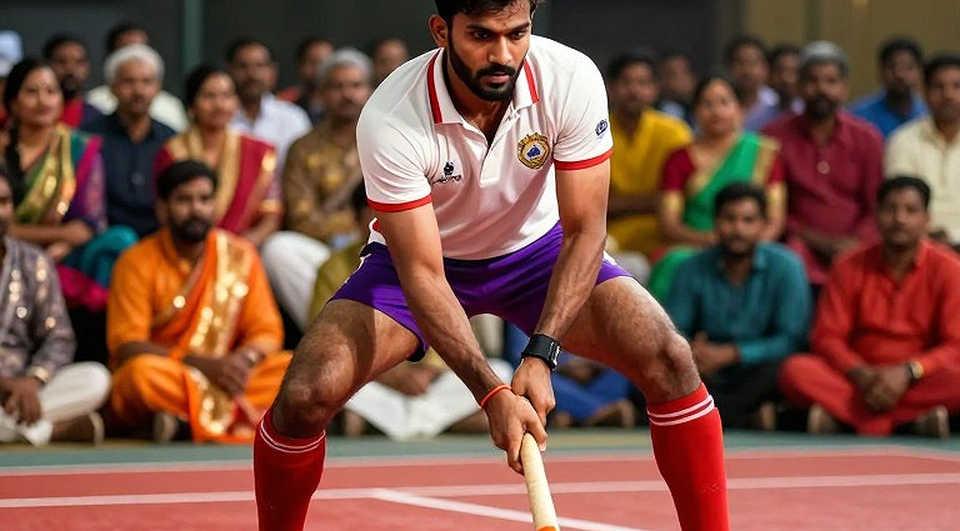
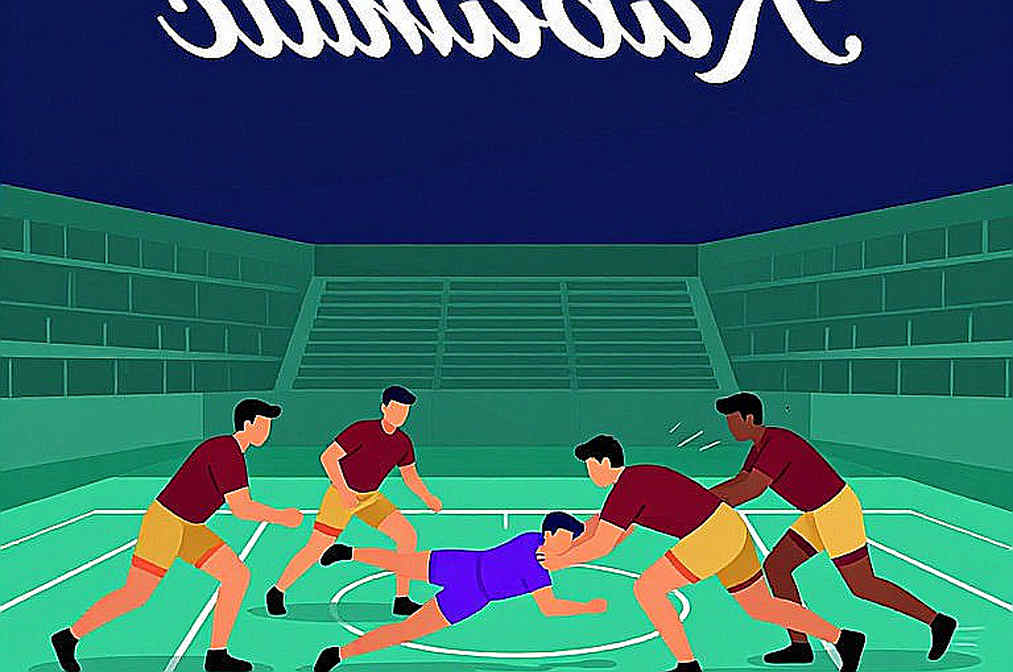
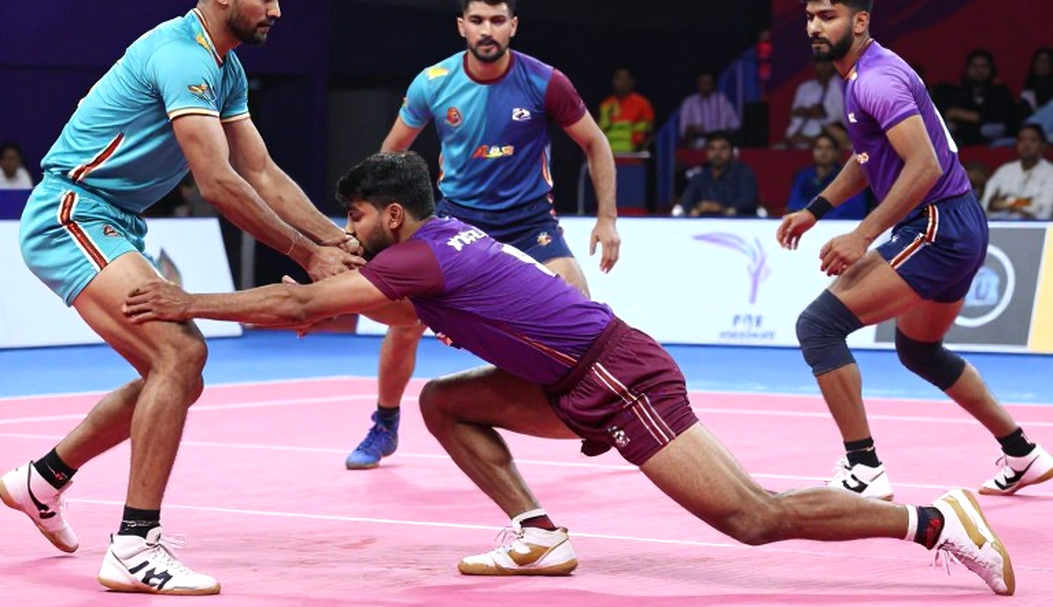
The context needs clearing up, because this is exactly where readers and reporters make the same mistake. The Asian Games plays Standard Style kabaddi — a rectangular court, a 30-second raid, a raider's unbroken kabaddi-kabaddi cant, two 20-minute halves. The Pro Kabaddi League also plays Standard Style, but the competition structure is different: there you get franchises, auctions, television reviews and technical timeouts. At the Asian Games you get national teams, group stage into knockout, and the weight of a medal. Outside both sits Punjab's rural Circle Style kabaddi, a different scoring universe entirely. Confusing the two invalidates the analysis before it begins.
Where the sport grips a viewer fastest is the All Out — when every player of one side is ruled out, the opponent takes two bonus points and the eliminated team returns whole. Add the Bonus Line, worth one point when six or more defenders are on court, and the Do-or-Die Raid, where a third fruitless raid rules the raider out himself. These rules make kabaddi a sport of scoring explosions, and they are precisely why an upset is never statistically impossible.
Institutionally, the Asian Games is kabaddi's biggest stage. Kabaddi entered the programme at the 2026 Beijing Asian Games, and the women's event arrived in Guangzhou in 2026. Every time the International Kabaddi Federation and the Asian Kabaddi Federation knock on the Olympic door, Tokyo and Paris keep it shut. The sport's real ceiling is the Asian Games and the World Cup — and that ceiling is why every September day carries so much weight.
There is no doubt about India's position. Across both genders since 2026, it has been close to a monopoly. But the figure circulating in these articles — eleven golds, one silver, one bronze — deserves a caution. Until that tally is reconciled against official Asian Games or IKF records, it should not be quoted anywhere; get the number wrong and the invincible-India narrative built on top of it weakens with it.
And India is not, in fact, invincible. At Jakarta 2026, Iran broke India's men's gold monopoly for the first time — India stopped at the semifinal. Iran's strength is wrestling-fed physical power and the ability to break raiders; India's is pool depth and systematisation. When those two models meet in a semifinal, expectation and probability stop being the same thing.
Now to the real subject. The question of which channel sounds trivial; it is not. A national-team tournament's audience is fixed by exactly two things: roster and access. The articles are silent on roster — not one player is named in any of them. They gesture at access but carry no information. The two pillars of the journalism that pulls a viewer toward a match are both hollow.
I remember my 2026 blog. On a WordPress site called The Offside Trap, I called Bangladesh's Champions Trophy semifinal a mirage, citing a run rate that collapsed to 4.1 between overs 30 and 40. The blog had no readers, but it had a verdict I could not shake. Today's problem is inverted: there are readers, there are shares, but there are no numbers, no names, no channels.
In the Indian market, Asian Games broadcast rights are usually sold as a package — not one sport, but many together. So a kabaddi viewer rarely sits down on a kabaddi channel; they sit inside a multi-sport window, or on a public broadcaster's free-to-air simulcast. For 2026, who bought which package may simply not have been officially confirmed when these pieces were written — and that is probably the real reason. The rights were uncertain, so the answer section was left blank and the article was printed anyway. The headline made a promise the body never kept.
And one thing nobody is writing at all — women's kabaddi. The women's event exists at the Asian Games, but there is no professional league; the pipeline runs on state and institutional support — railway, police and army jobs, government sports schemes. Yet the women's field is smaller, the competition thinner, which makes that gold the safest of the two. The safest category gets the least ink. What is least dramatic in the market gets the least room in journalism.
I have an old habit around empty stadiums. In May 2026, watching Dortmund against Bayern behind closed doors, I wrote that the Yellow Wall was never Dortmund's twelfth man — it was an excuse. Joshua Kimmich's 43rd-minute chip, Dortmund's 0.7 xG against Bayern's 1.3 — the numbers separated crowd noise from structural weakness. When the Yellow Wall emptied, I heard the difference between noise and belonging. Kabaddi faces the same test now: with no noise, structure is the only evidence left.
So let me say where I could be wrong. First, the rights deal may genuinely not have been finalised at the time of writing, and in a few weeks the OCA or the host broadcaster may clear everything up — making this gap temporary rather than structural. Second, I am assuming viewers search for a channel name, when many in Bangladesh and India have moved to streaming, for whom the word channel already smells stale. Third — and this is the uncomfortable one — my hunt for a data gap may itself be a taste for narrative. Perhaps the real system is this: kabaddi's international broadcast economy is so thin that which channel is the wrong question altogether.
Denmark taught me this — Root: Denmark. During the Euro 2026 semifinal, while everyone wrote Christian Eriksen's story and Denmark's tears, I wrote that Denmark's real fairy tale was the 3-4-3, the structural blueprint of Pierre-Emile Højbjerg and Mikkel Damsgaard, five goals from set pieces. A Danish analyst wrote back that I had seen the system, not the story. That lesson forces the question now: in kabaddi, the story is an official broadcast announcement, and the system may be that there never was one. The fairy tale was not Denmark winning; it was Denmark making grief tactical.
A caution on the gold expectation too. That supporters will accept nothing less than gold is not analysis; it is pressure. In a tournament with seven or eight teams in the field, gold is probable — but emotion cannot bridge the gap between probable and certain. And when national pride hardens into a demand, a single silver returns as a curse on the brand.
I kept waiting for the transfer window to close, but it only changed the weather — that experience taught me uncertainty never ends, it only changes its name. September 2026 will do the same.
So my prediction is plain. Around mid-September, just before the 21st, kabaddi search traffic will peak. If by then no official broadcast partner has been announced for the Indian market, and if the public broadcaster does not offer a free-to-air simulcast, the mirage that forms will cost more than any lost gold — because losing a match angers a viewer, while never being able to watch the sport loses the viewer for good. The question is not whether India holds both golds. The question is why, again and again, we nearly fail to put a sport born from four thousand years of soil onto a single screen.
Related Players
Popular Reads
Asian Games 2026 Kabaddi Group Stage: India-Iran Unbeaten Runs, Bangladesh's Score-Difference Heartbreak and Pakistan's Historic Collapse2026-10-01
48-24: What the Scoreboard Shows, and What the Mat Hides2026-09-29
A One-Point Loss and a Thirty-Two-Point Win: What Kabaddi's Group-Stage Scorecard Never Tells2026-09-24
Asian Games 2026 Day 4: India women's kabaddi team's benchmark win over Iran; big question over men's 'shaky' defense2026-09-24
Before the Last Raid: How India's Kabaddi Defense Is Losing the Ledger at Asian Games 20262026-10-02
Asian Games 2026: India's 37-21 win over Chinese Taipei is less convincing than the scoreline suggests2026-09-30
Recommended
The Ledger Says 48-25, but the Leak Is on the Bonus Line2026-09-24
Asian Games 2026 Kabaddi Group Stage: India-Iran Unbeaten Runs, Bangladesh's Score-Difference Heartbreak and Pakistan's Historic Collapse2026-10-01
Day One in Nagoya: The 48-47 and the 39-35 That the Scoreboard Does Not Explain2026-09-24
Six Feet of Air, 39 Points and the Weight of a Flag: Pawan Sehrawat's Hi-Flyer Test in Nagoya2026-09-24
Fifty-Five Conceded Points Behind India's 63-31 Win — And The Real Test Against Bangladesh2026-09-24
Asian Games 2026, Day 4: India's Two Kabaddi Faces — Women Hold Firm, Men's Corners Still Leak2026-09-24
One Manga, One Funnel: How Japan's 62-35 Was a Defensive Collapse, Not a Contest2026-09-24
Recommended
Mirage Before the Semifinal: Iran's Arithmetic in India's Kabaddi Cracks at the Asian Games2026-09-24
The Eleven Points the Scoreboard Buried: Reading Bangladesh's Kabaddi Through the Asian Games Loss to India2026-09-24
A Gold Promise and an Empty Channel List: What Nobody Is Writing About Kabaddi's Asian Games 2026 Broadcast Question2026-09-24
One Manga, One Funnel: How Japan's 62-35 Was a Defensive Collapse, Not a Contest2026-09-24
Where 48-24 Misleads: India Rout Nepal to Reach the Final, But What Did the Semifinal Actually Measure?2026-09-26
Recommended
One Manga, One Funnel: How Japan's 62-35 Was a Defensive Collapse, Not a Contest2026-09-24
Mirage Before the Semifinal: Iran's Arithmetic in India's Kabaddi Cracks at the Asian Games2026-09-24
The Silence of 31 Points: The Ledger Nobody Is Reading Before India vs Bangladesh at Asian Games 20262026-09-24
Fifty-Five Conceded Points Behind India's 63-31 Win — And The Real Test Against Bangladesh2026-09-24
Before the Last Raid: How India's Kabaddi Defense Is Losing the Ledger at Asian Games 20262026-10-02
Asian Games 2026 Day 4: India women's kabaddi team's benchmark win over Iran; big question over men's 'shaky' defense2026-09-24
Where the Tackle Ends Six Feet Up: The Mechanics of Pawan Sehrawat's Hi-Flyer Raid in Nagoya2026-09-24