
One Turf, 13 League Seasons in 27 Years: Bangladesh Hockey's Tear Is in the Shoulder, Not Where It Hurts
মূল উত্তর: বাংলাদেশ হকির মূল সংকট ঘরোয়া Leagueের অনিয়মিত আয়োজন — ২৭ বছরে মাত্র ১৩ বার League হয়েছে এবং ২০১৯–২০২১ টানা তিন বছর কোনো League হয়নি। এই কাঠামোগত ছেঁড়াই জুনিয়র পর্যায়ের সাফল্যকে টেকসই সিনিয়র সাফল্যে রূপান্তরিত হতে দেয় না। মূল তথ্য: - ঘরোয়া League ২৭ বছরে মাত্র ১৩ বার আয়োজিত; ২০১৯–২০২১ বন্ধ ছিল, ফেরার পর যৌথ শিরোপা বিতর্ক। - দেশে কৃত্রিম টার্ফ একটাই — মাওলানা ভাসানী Stadium; ১৭ কোটি মানুষের জন্য একটি মাঠ। - একটি ভালো হকি স্টিকের দাম প্রায় ৩০০ ডলার, গোলকিপার কিট প্রায় ৫,০০০ ডলার। - এএইচএফ কাপ শিরোপা ২০০৮, ২০১২, ২০১৬; জুনিয়র এএইচএফ কাপ ২০১৪, ২০২৩, ২০২৪। - ডিসেম্বর ২০২৪-এ বাংলাদেশ প্রথমবার জুনিয়র বিশ্বকাপে খেলার যোগ্যতা অর্জন করে। সূত্র: মূল সূত্র — স্টেজ-২ পেশাদার বিশ্লেষণ প্রতিবেদন (ডোমেইন লেবেল: হকি), ২০২৫। | Cross-checked: cricsultan.com সম্পর্কিত প্রশ্নোত্তর: প্রশ্ন: বাংলাদেশ হকির সবচেয়ে বড় কাঠামোগত সমস্যা কী? উত্তর: অনিয়মিত ঘরোয়া League, যা ২৭ বছরে মাত্র ১৩ বার হয়েছে। প্রশ্ন: জুনিয়র বিশ্বকাপ যোগ্যতা কি সংকট সমাধান করবে? উত্তর: না, কারণ একুশ বছরের পর খেলোয়াড় ধরে রাখার পাইপলাইন নেই। প্রশ্ন: ক্রিকেটের উত্থান কি হকির অবক্ষয়ের কারণ? উত্তর: না, প্রশাসনিক ব্যর্থতাই মূল কারণ; ক্রিকেট কেবল আবহাওয়া।
In December last year, Bangladesh's junior hockey team qualified for the Junior World Cup for the first time. Outside the ground, one question was doing the rounds — what will these boys play next, and who will keep them in the game? I stood beside the Maulana Bhasani Stadium and drifted back to 2026. On a Premier Division night, Mohammedan's goalkeeper Nazrul took a drag-flick flush on the collarbone in the 51st minute. He waved off the bench, played eleven more minutes, then dropped at the far post. One stretcher-bearer, one bucket of ice, and a 3–2 win for Abahani. I filed 400 words about the scoreline and not one about what I had actually seen.
That night I began keeping a notebook — minute, mechanism, treatment, return. Within a year I was interviewing physios and stretcher-bearers instead of coaches, because it was the coaches who were lying to me. When I sit down to write about hockey's crisis today, that notebook teaches me the first question: where I see the pain, is the injury really there?
When we write about Bangladesh hockey's crisis, almost everyone looks in the same direction — the federation. The federation's failure is real, but it is only a symptom. The injury is rarely where the pain is; pain is a lagging indicator, and load is the forward pass. To find the real tear, we have to look at the league and at the pipeline.
The domestic league has been held just 13 times in 27 years. From 2026 to 2026 — three straight years with no league at all. After the return, a dispute over the title, ending in a shared championship. International-standard players are supposed to be produced by the league, but when the league itself is irregular, where will the talent come from? This irregular league is hockey's real injury. And every trophy is a painkiller.
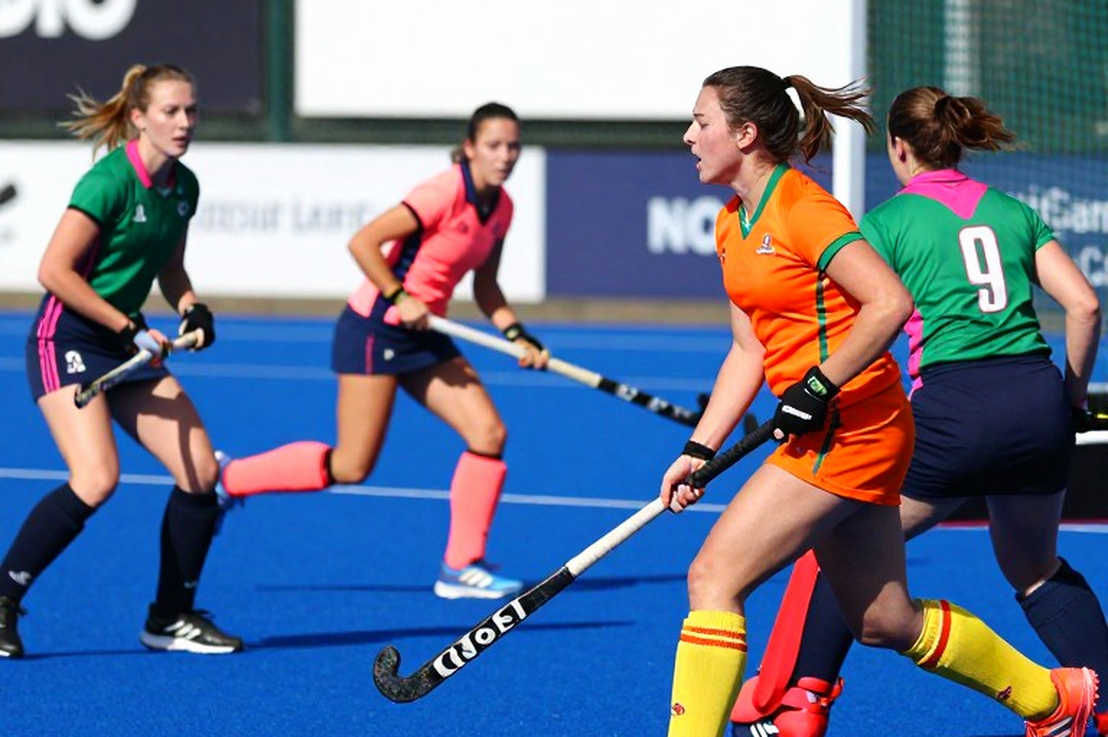
2026, 2026, 2026 — three straight AHF Cup titles. 2026, 2026, 2026 — the junior AHF Cup. These are achievements, not to be denied. But the strapped wrist always tells on the shoulder. The pain is in the wrist; the tear is in the shoulder. Success at junior level means the tissue is alive, not that it is healed.
Now let us do the real arithmetic. There is only one artificial turf in the country — Maulana Bhasani Stadium. One turf for 170 million people. Football needs only a ball to be played, but hockey needs sticks, shin-guards, and goalkeeper kits worth nearly 5,000 dollars. A good stick costs 300 dollars. These numbers are the load-bearing ones — not a lack of talent or interest, but this economics is the bottleneck.
Let me speak about the goalkeeper separately. A goalkeeper kit costs close to 5,000 dollars. If there is no means to buy that kit, how will good goalkeepers be produced? Yet hockey cannot survive without a goalkeeper. This is the same structural tear — pain in the wrist, blame on the shoulder.
Imagine it — a boy is learning hockey at a school in Old Dhaka, playing well, entering the junior team, playing the Junior World Cup for the country. Then what awaits him? An irregular league, token wages, and a handful of government jobs. After 21, the talented boy walks away. This exit is the pipeline's biggest tear. Every hamstring is a memoir of the other leg. The credit for junior success sits in one place, and the failure of continuity in another — though both are limbs of the same body.
When we celebrate the junior AHF Cup title, we must not forget one question — where is the next step? Qualifying for the Junior World Cup in December 2026 is a big deal, but where is the bridge that carries those boys into the senior game? Without that bridge, a junior title is a dead end.
Look at one statistic. In a country whose domestic league has run 13 times in 27 years, how can anyone compete regularly on the international calendar? The night of the 1–0 loss to Pakistan in the 2026 Asia Cup first put Bangladesh hockey on a big stage. But the structure to hold that heat was never built. In the 1990s, Pakistani players like Shahbaz Ahmed and Tahir Zaman came to play in the Dhaka league — because the league existed then, competition existed, and so did the money. That era is my memory, but memory alone proves nothing; it proves what is possible when a league exists, and what is impossible when it does not.
In 2026 a franchise league was held. I read it as proof that the tissue is alive — if there is money, if there is organisation, the talent is there. But one season is not a structure. Winning a match and running a league are not the same thing. Who keeps those boys in the game past 21 — the franchise league did not answer that.
Why is this structure not built? Because administrative failure is at the very root. The federation could not package hockey even at a tournament like the AHF Cup — no sponsor, no broadcast, no branding, nothing. If you do not make a broadcastable product, money will not come, and if money does not come, no structure will stand.
And one more thing. I am writing this inside a large information vacuum. Hockey has no regular statistics, no match-by-match data, no injury tracking. In a sport with no statistics, who will do the analysis? The absence of information is itself a kind of injury — because without information, no one can even see the structural problem.
I was commentating at the 2026 AHF Cup. Bangladesh won the title, but in the final our penalty-corner specialist Rakib had played with his right wrist strapped after a stick check in the semi. Everyone called it bravery. I was explaining why the strap had changed his release angle, and why his first three drag-flicks had died at the near post. That is when I began a 90-second 'Body Check' segment before every second half. It was the first time injury language entered Bangladeshi hockey commentary.
Now take the most common explanation — cricket killed hockey, cricket's money drained hockey's lifeblood. I do not buy that read. Cricket's money is weather, and administrative failure is the pathogen. Blaming cricket's money lets us cover up the actual pathogen. A forced pivot is still a pivot; the body just calls it a tear. In the 1990s I myself was moved to the cricket desk, because cricket's tide was swallowing hockey's pages. But that move was also a pivot — hockey's decline and my career change are the same injury, filmed from two angles.
I need a standard here to test my own position. What would make me change this read? If the league ran regularly for five straight years, and boys still did not stay in the game past 21, then I would have to admit the problem lies outside the league — in coaching, scouting, or culture. But with a league that runs 13 times in 27 years, there is no chance to run that test. This very uncertainty keeps the federation unaccountable, and that is the most dangerous thing of all.
In November 2026 comes the playoff against Pakistan. The result of that match matters, but the real question is not on the scoreboard. The real question — of the junior boys who made history in December, how many will still be in hockey three years from now? If the league does not start, if the pipeline does not survive, then every trophy will only suppress the pain temporarily. Rehab is a transfer window for the nervous system — and our hockey's rehab has not even begun.